

92% of first-time Pilot Chicken players pick the wrong difficulty mode. That single choice – Hard mode with its 25-step runway and eye-catching x1,000,000 multiplier – wipes out more session budgets than any other Pilot Chicken mistake to avoid. Spribe built three risk levels into this crash game for a reason, and jumping straight to the top one is like entering a poker tournament without knowing the blinds.
The eight mistakes below keep showing up in player forums, demo session data, and bankroll tracker screenshots. Some are obvious once you see them. Others feel like smart moves until the math catches up. Fix these early, and each session gets noticeably better.
Pilot Chicken Mistake #1: Starting on Hard Mode
Why not aim for the biggest multipliers right away? Hard mode gives you 25 steps on the runway, with numbers going from x1.5 up to x1,000,000. Real figures, printed right there in the game specs. What they don’t mention upfront: the chance of a plane ending your round on any step is much higher than on the other two modes.
Players who jump into Hard mode first tend to drain their budget in under ten rounds. Crashes hit faster, recovery takes longer, and if your stake size doesn’t match that kind of volatility, you’ve put yourself at a disadvantage before round one starts.
Better approach: Start with Easy mode (15 steps, x1.05 to x25 multipliers). Run 10-15 rounds without any real money pressure. Understand where the plane tends to arrive, develop a feel for timing, then decide whether Medium or Hard actually fits your session goals.
Treating Pilot Chicken Like a Slot (Big Mistake)
Slots run on cycles – or at least that’s the mental model most players carry into new games. Pilot Chicken doesn’t work that way. Every round is independent. The result of the previous step sequence has zero effect on what happens next. The RNG resets at the start of each round, period.
This matters because players who’ve just survived 8 steps in a row on Medium mode tend to think they’re “on a hot streak” and push further. They’re not. Each step carries the same probability as the first one. The chicken’s survival record from the last round? Irrelevant.
The same logic applies in reverse: after three short crashes in a row, some players wait for a “long round” to compensate. That wait has no statistical basis in Pilot Chicken.
Ignoring the Auto Cash-Out (or Setting It Wrong)
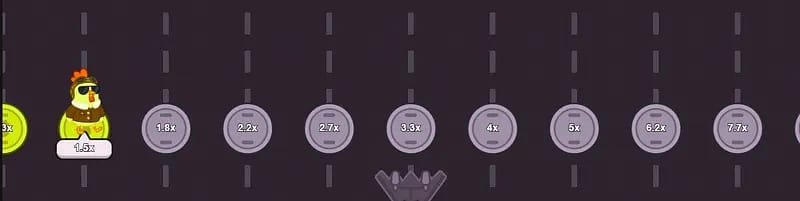
The auto cash-out is one of the most underused tools in Pilot Chicken. You set a target multiplier before the round starts, and the game cashes out on its own when the chicken reaches that step. No frantic clicking under pressure.
Two mistakes show up here:
Mistake 1 – Ignoring it altogether. Manual cash-out during a live round is trickier than it looks. The multiplier sequence speeds up visually, and the urge to wait “just one more step” is hard to resist. Players who stick to manual play overshoot their target more often than not.
Mistake 2 – Setting auto cash-out way too high. Picking a target of x500 on Easy mode makes no tactical sense. The maximum multiplier on Easy is x25. Match your auto cash-out to the mode’s actual range, not to wishful thinking.
A practical starting point: on Easy, set auto cash-out between x2.5 and x5. On Medium, x3 to x10 works well. On Hard, any fixed target needs to account for the higher crash rate per step.
Picking a Risk Level Without Understanding the Tradeoff
| Mode | Steps | Multiplier Range | Best For |
|---|---|---|---|
| Easy | 15 | x1.05 – x25 | Steady small wins, longer sessions |
| Medium | 20 | x1.3 – x1,000 | Balanced risk, mid-range targets |
| Hard | 25 | x1.5 – x1,000,000 | High variance, specific bankroll needed |
Each mode plays like a different game. Easy rewards patience and frequent small payouts. Medium creates real tension around the mid-range multipliers. Hard is its own beast – built for players who accept that most rounds will end short.
Abbiamo testato anche Playjonny Casino Review 2025, che segue un approccio simile.
Per un confronto, dai un’occhiata alla nostra recensione di Lizaro Casino Under the Microscope.
The mistake is treating mode selection as a personal préférence rather than a calculated decision. If your session budget is tight, Hard mode is the wrong starting point. If you want steady rounds to practice timing, Easy gives you the clearest data.
Not Setting a Session Limit Before the First Round
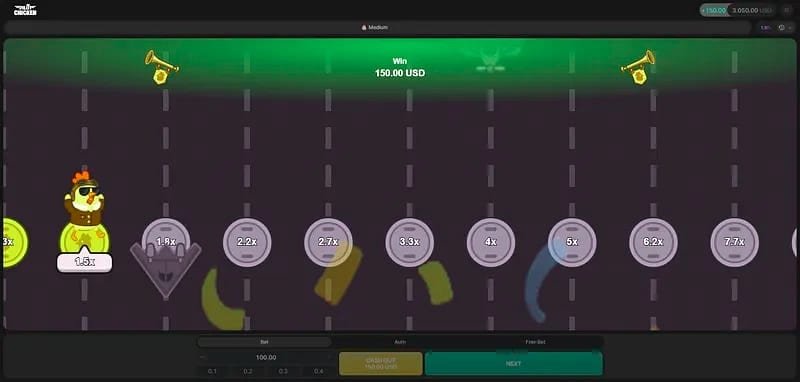
Pilot Chicken rounds last seconds. That pace creates a specific problem: sessions pile up faster than players track them. Without a hard stop on either time or total budget, the session stretches on. What starts as a 20-minute test can turn into 90 minutes of play, rationalized round by round.
Set two limits before you start:
- Stake limit – the maximum you’re willing to put into the session
- Stop-win target – a specific multiplier profit where you close the session
The second limit matters more than most players realize. Pilot Chicken generates winning streaks. Without a stop-win, the natural response is to keep playing through the peak, and the session ends near zero after a string of crashes.
Write both numbers down before the session. Not as a vague guideline – specific figures, decided before round one.
Chasing the x1,000,000 Multiplier in Pilot Chicken
The maximum theoretical multiplier in Pilot Chicken is x1,000,000. That figure is real, confirmed in the official game specs. It’s also capped at a EUR 10,000 maximum payout, which means a EUR 0.01 bet would be the only stake that could technically reach that multiplier without hitting the ceiling.
Players who hear “x1,000,000” and build their Hard mode plan around reaching it will mismanage every session. The practical ceiling for most sessions depends on probability, not theoretical peaks.
On Hard mode, realistic targets fall in the x20 to x100 range for experienced players. The extreme multipliers exist, but reaching them demands a specific bankroll approach: very small stakes, acceptance of many consecutive crashes, and zero emotional attachment to any single round.
Skipping the Demo Before Real Money Play
Every serious platform offering Pilot Chicken includes a free demo mode with full functionality. The demo gives you access to all three risk levels, the auto cash-out system, and the actual round mechanics – no deposit needed.
Players who go straight to real money are paying for calibration time with their budget. The demo exists to avoid that. Use it to:
- Test auto cash-out settings across all three modes
- Build a realistic sense of round duration and multiplier frequency
- Figure out which risk level matches your preferred session pace
A useful benchmark: run 30 demo rounds per mode before committing real money to that mode. If you’ve only tested Easy in the demo, don’t switch to Hard with real money on session two.
How Fast Stakes Compound on Hard Mode (Pilot Chicken Math)
Here’s a scenario that plays out often: a player sets a fixed stake of EUR 5 per round on Hard mode. The first three rounds crash at step 2, step 1, and step 3. That’s EUR 15 gone in under two minutes. The player bumps the stake to “recover faster.” The next crash costs EUR 10 per round. The bleeding accelerates.
Pilot Chicken’s Hard mode is built for high volatility – the crash probability per step is steeper than on easier settings. A stake that works on Easy mode may not work on Hard. Before playing Hard mode with real money:
- Reduce your per-round stake compared to what you’d use on Easy
- Accept that 5-7 consecutive short crashes is normal variance
- Never increase stake size to recover a run of losses
The game’s RTP sits between 96% and 97% according to independent reviews (BigWinBoard and others), while the official site claims 99%. That range means the house edge is real regardless of mode. Managing stake size is the main variable you can actually control.
Player Expériences with Pilot Chicken
“I wasted my first session because I set the auto cashout at x200 on Easy mode. Obviously it never triggered. Dropped it to x4 and the game started making sense.” – James, London, March 2026 – 4.6/5″
—
“The demo saved me a lot of frustration. I ran about 40 rounds on Medium before going real money. Knew what I was doing by the time it counted.” – Sophie, Manchester, February 2026 – 4.7/5″
—
“Hard mode requires a completely different mindset – smaller stakes, no attachment to any single round. Took me a while to figure that out.” – Callum, Edinburgh, March 2026 – 4.5/5″
—
Quick Reference: Pilot Chicken Errors and Fixes
| Common Mistake | Fix |
|---|---|
| Starting on Hard mode | Begin with Easy, learn the mechanics before advancing |
| No auto cash-out | Set a realistic multiplier target per mode before each round |
| Session without limits | Fix stake limit + stop-win target before round one |
| Increasing stake to chase losses | Maintain fixed stakes; mode volatility already accounts for variance |
| Skipping the demo | Run 30+ demo rounds per mode before real money play |
| Expecting long rounds on Hard | Accept high crash frequency as part of the mode’s design |
Frequently Asked Questions About Pilot Chicken Mistakes
What is the biggest Pilot Chicken mistake beginners make?
Starting on Hard mode without understanding its volatility is the most costly beginner error. Hard mode has 25 steps with multipliers up to x1,000,000, but the crash probability per step is much higher than Easy or Medium. New players who start there drain their budget before they’ve figured out cash-out timing or auto cash-out settings.
How do I use auto cash-out in Pilot Chicken the right way?
Set auto cash-out to a realistic multiplier target for the mode you’re playing. For Easy mode, targets between x2.5 and x5 are solid starting points. On Medium, x3 to x10 gives you room to generate decent returns without pushing into low-probability territory. The key mistake is setting the target too high for the mode’s actual multiplier range.
Does the previous round affect the next one in Pilot Chicken?
No. Pilot Chicken uses a certified RNG (Random Number Generator) and runs on a Provably Fair system. Each round is fully independent. A long run in round 5 does not change the probability of a long run in round 6. Players who make decisions based on “hot” or “cold” streaks are working with information that doesn’t exist in the game.
What RTP should I expect playing Pilot Chicken?
Independent review platforms including BigWinBoard report a return-to-player rate of 96-97%. The official Pilot Chicken site lists 99%, but independent sources tend to be more conservative and practical for planning. A 96-97% RTP means the house keeps 3-4% of all wagers over a long session average.
Is there a mistake-free strategy for Pilot Chicken?
No strategy removes risk from a game built on variance, but a structured approach cuts down avoidable losses by a wide margin. The main pieces: pick a risk level that fits your session budget, use auto cash-out with realistic targets, set a session limit and stop-win before round one, and use demo mode to dial in your settings before playing with real money.
How do I avoid losing too much on Pilot Chicken Hard mode?
Hard mode calls for a smaller per-round stake than Easy or Medium because of its higher variance. Accept that consecutive crashes are normal – 5 to 7 short rounds in a row falls within the expected range for Hard mode. Never bump your stake to recover a series of losses. If your session budget runs low, switch to Easy or stop playing.
What is the Pilot Chicken maximum win cap?
The maximum payout is EUR 10,000 per round, regardless of multiplier. The theoretical maximum multiplier is x1,000,000, but the EUR 10,000 cap means only very small stakes (EUR 0.01) could theoretically reach that multiplier without being limited. For practical session planning, the cap rarely comes into play unless you’re on Hard mode with minimum stakes.
Responsible Gaming
Pilot Chicken is a real-money casino game. All outcomes are random and past results do not predict future ones. Set clear limits on time and money before each session.
18+ only. If gambling stops being entertainment, support is available:
- GamCare: 0808 8020 133 (free, 24/7)
- BeGambleAware: BeGambleAware.org
Final Verdict
Pilot Chicken is a solid crash game from Spribe – clean mechanics, three distinct risk modes, and a Provably Fair foundation that checks out. The Pilot Chicken mistakes that trip players up are predictable and fixable with a bit of prep: wrong mode for your budget, no auto cash-out target, sessions without limits.
Spend 30 rounds in demo mode, set your numbers in advance, and pick a risk level that matches your actual bankroll rather than your best-case fantasy. That kind of structured play pays off more reliably than chasing big multipliers ever will.
Rating: 4.6/5 ★★★★★